A Sicilian chef · An international journey
00
GS
The service

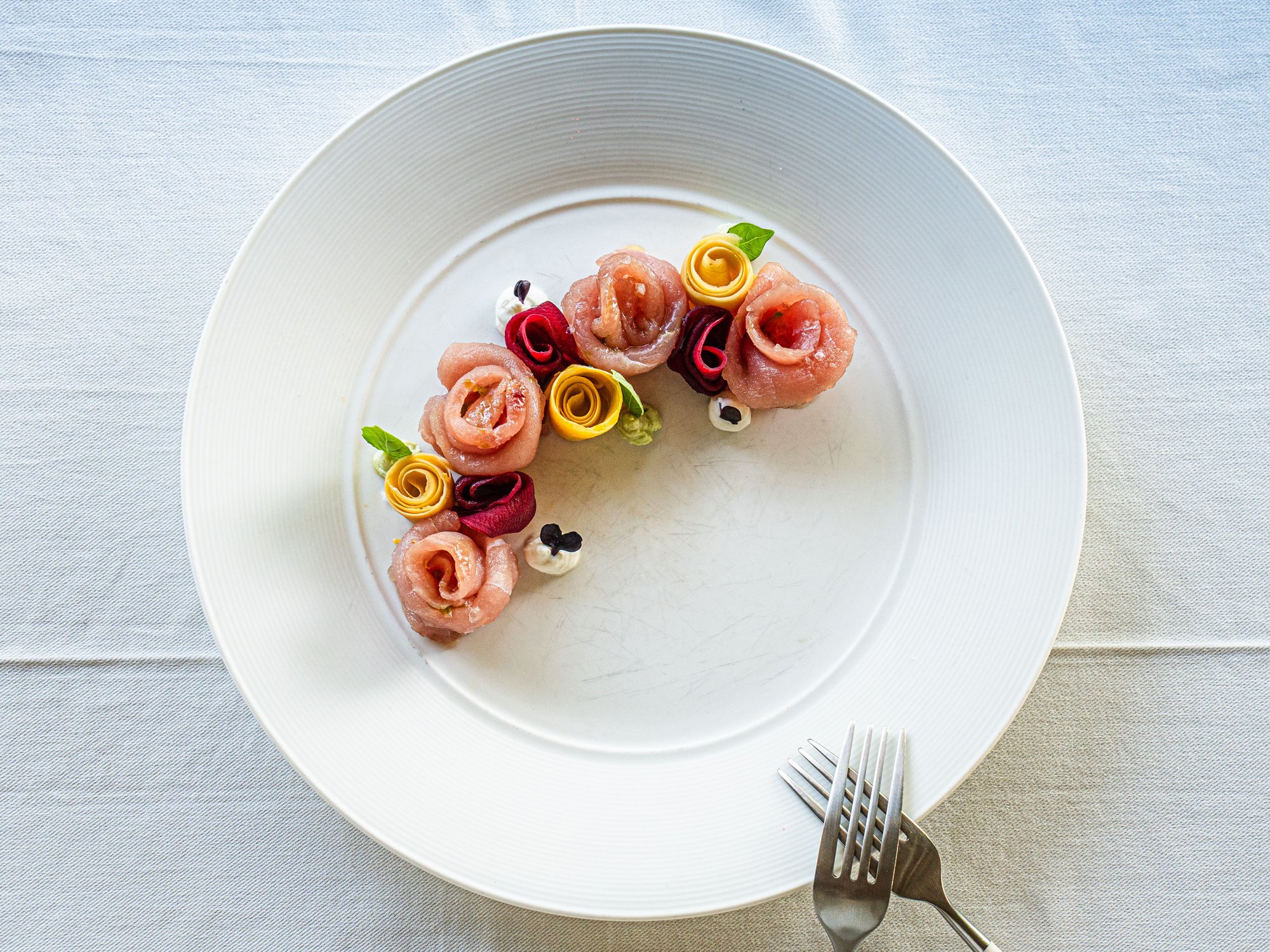
Reef Fish Crudo

Pickled Beetroot · Mango · Fava Bean Purée · Gorgonzola Cream

The full recipe

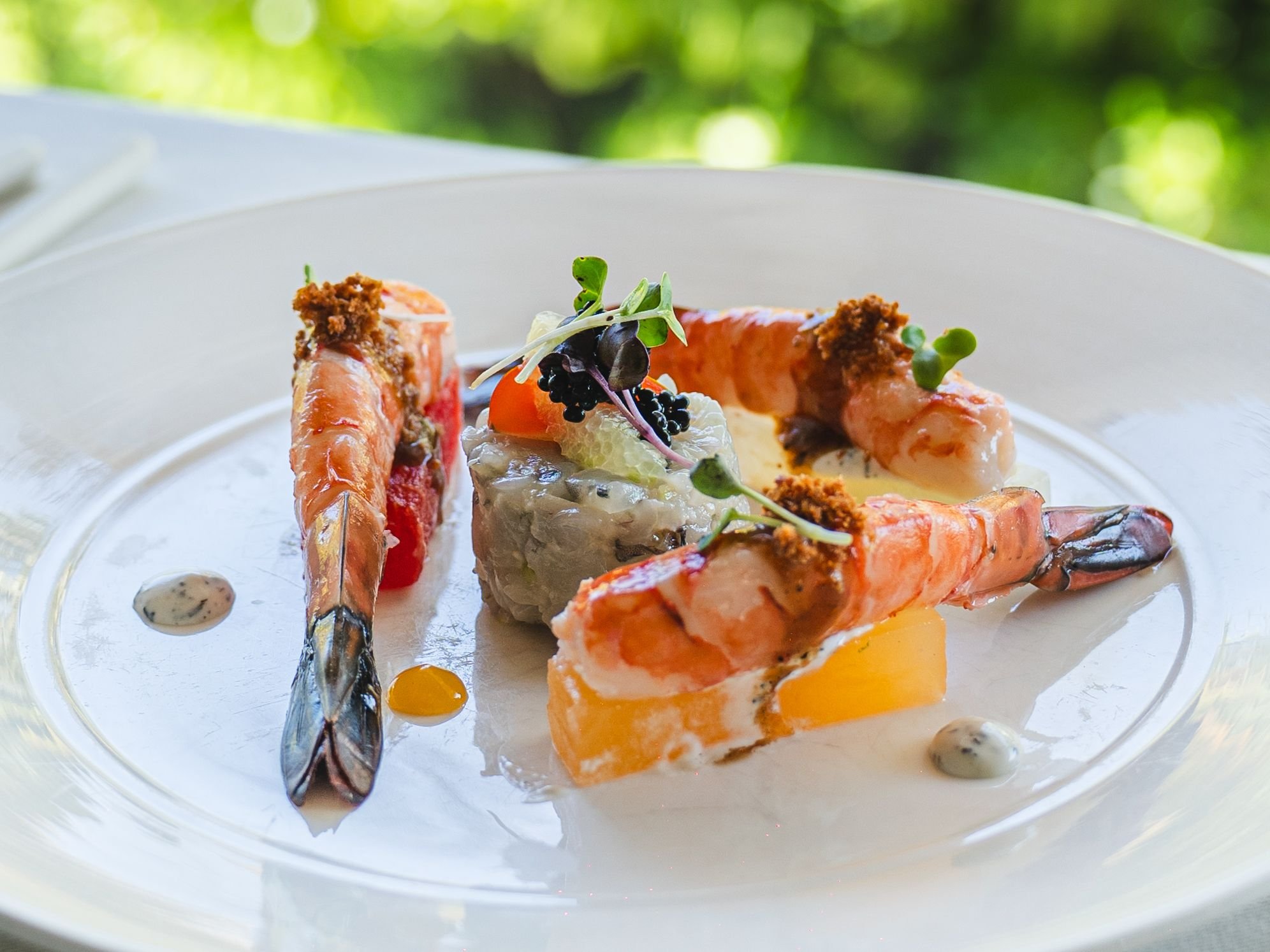
Low-Temperature Prawns

Compressed Melons · Prawn Tartare · Citrus · Truffle

The full recipe

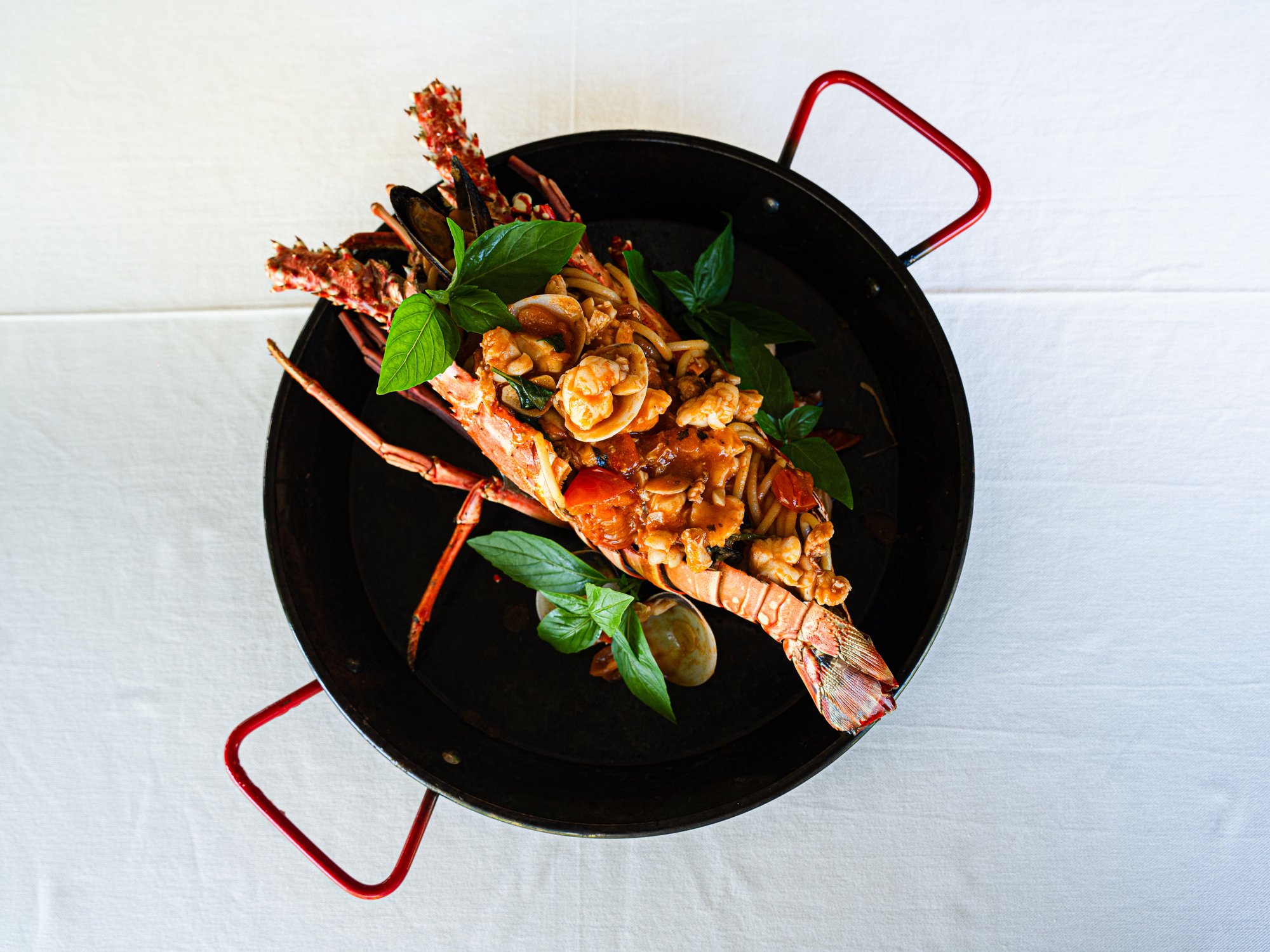
Spaghettone all’Aragosta

Gragnano Spaghettone · Lobster · Shellfish · Basil

The full recipe

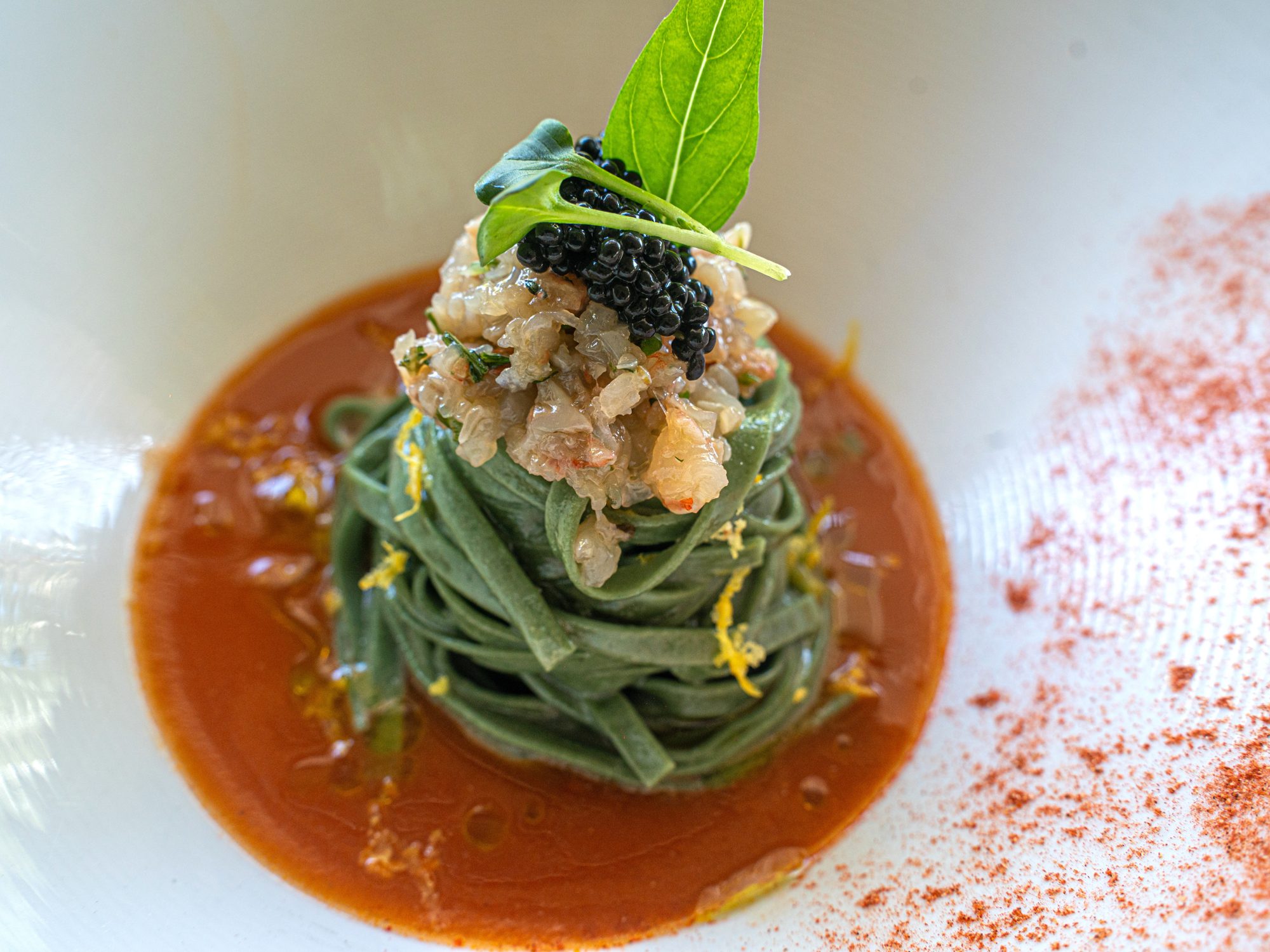
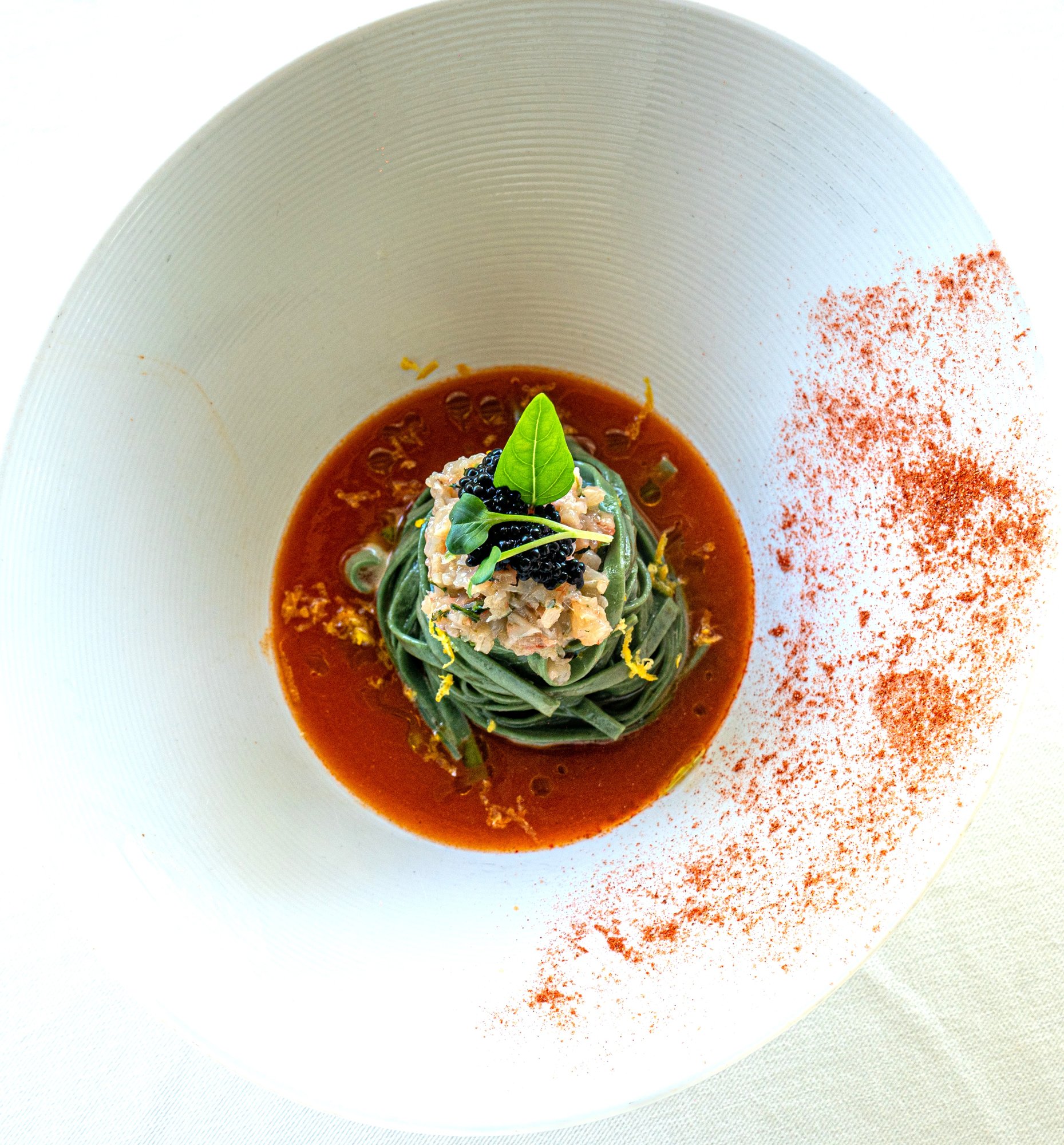
Spirulina Tagliolini

Scampi Tartare · Beluga Caviar · Shellfish Bisque · Lime

The full recipe

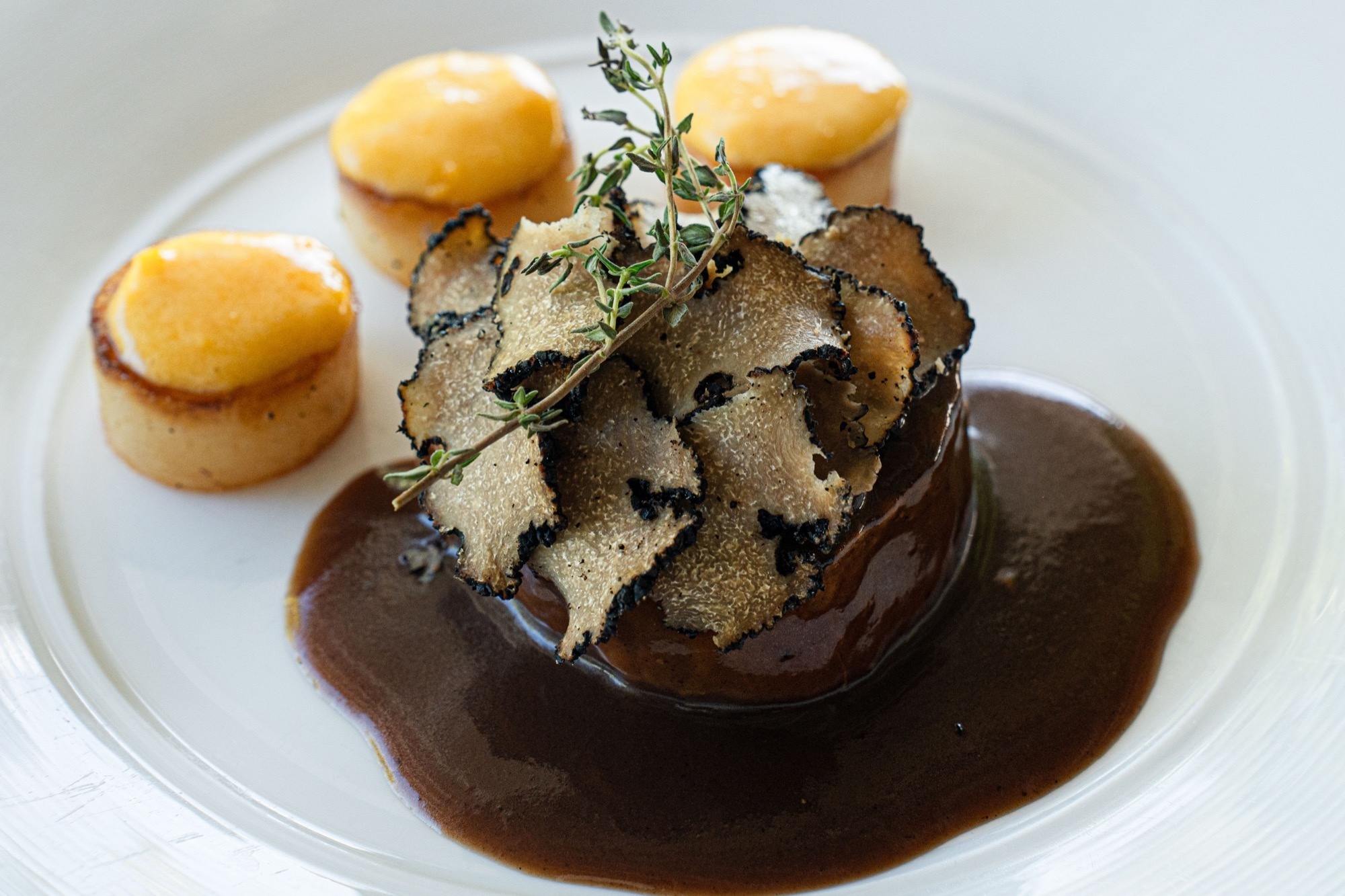
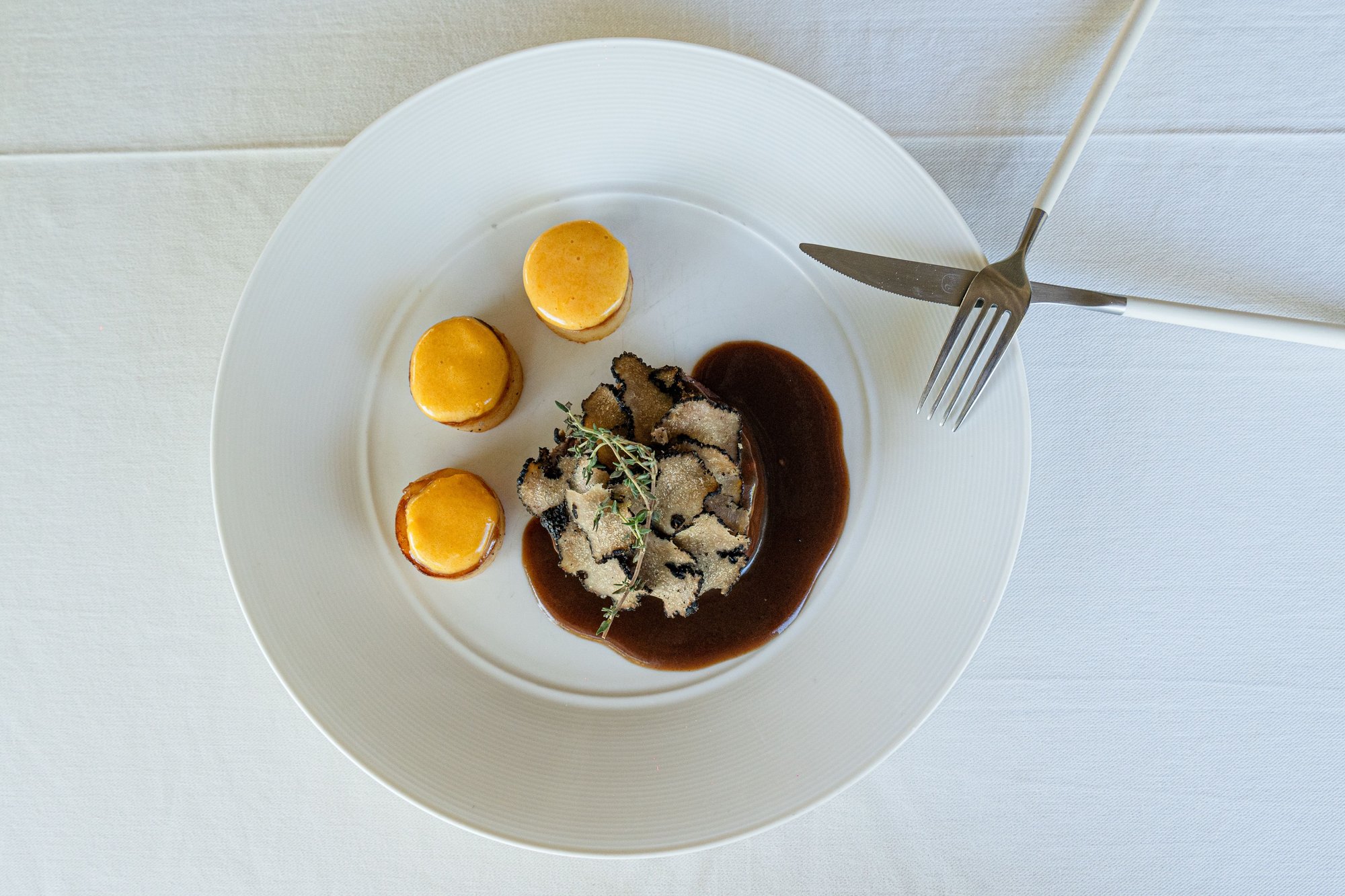
Roasted Fillet Mignon

Beef Jus · Fondant Potato · Tarragon Hollandaise · Truffle

The full recipe

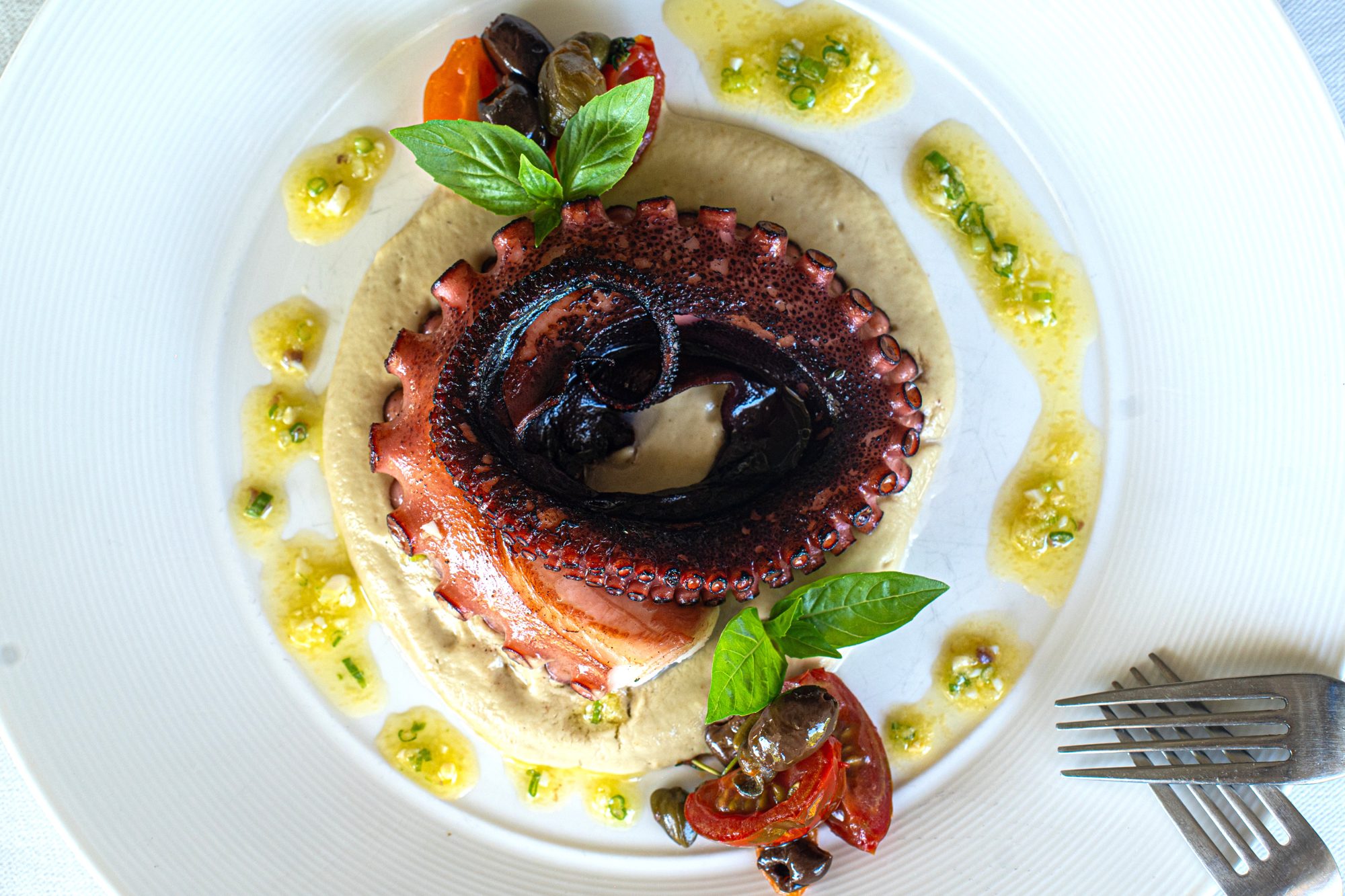
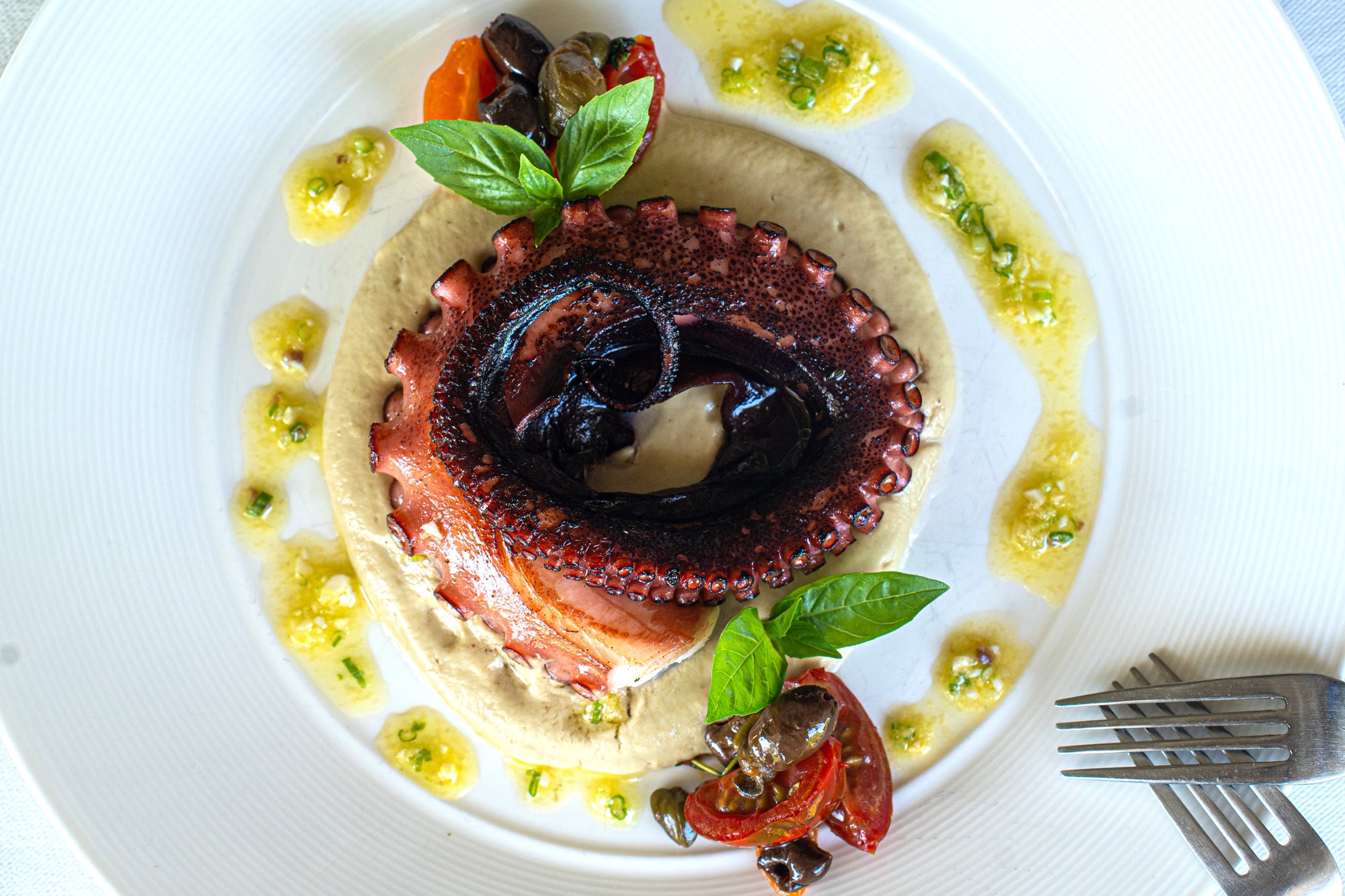
Embered Octopus

Charcoal-Grilled · Eggplant Purée · Italian Salsa Verde

The full recipe

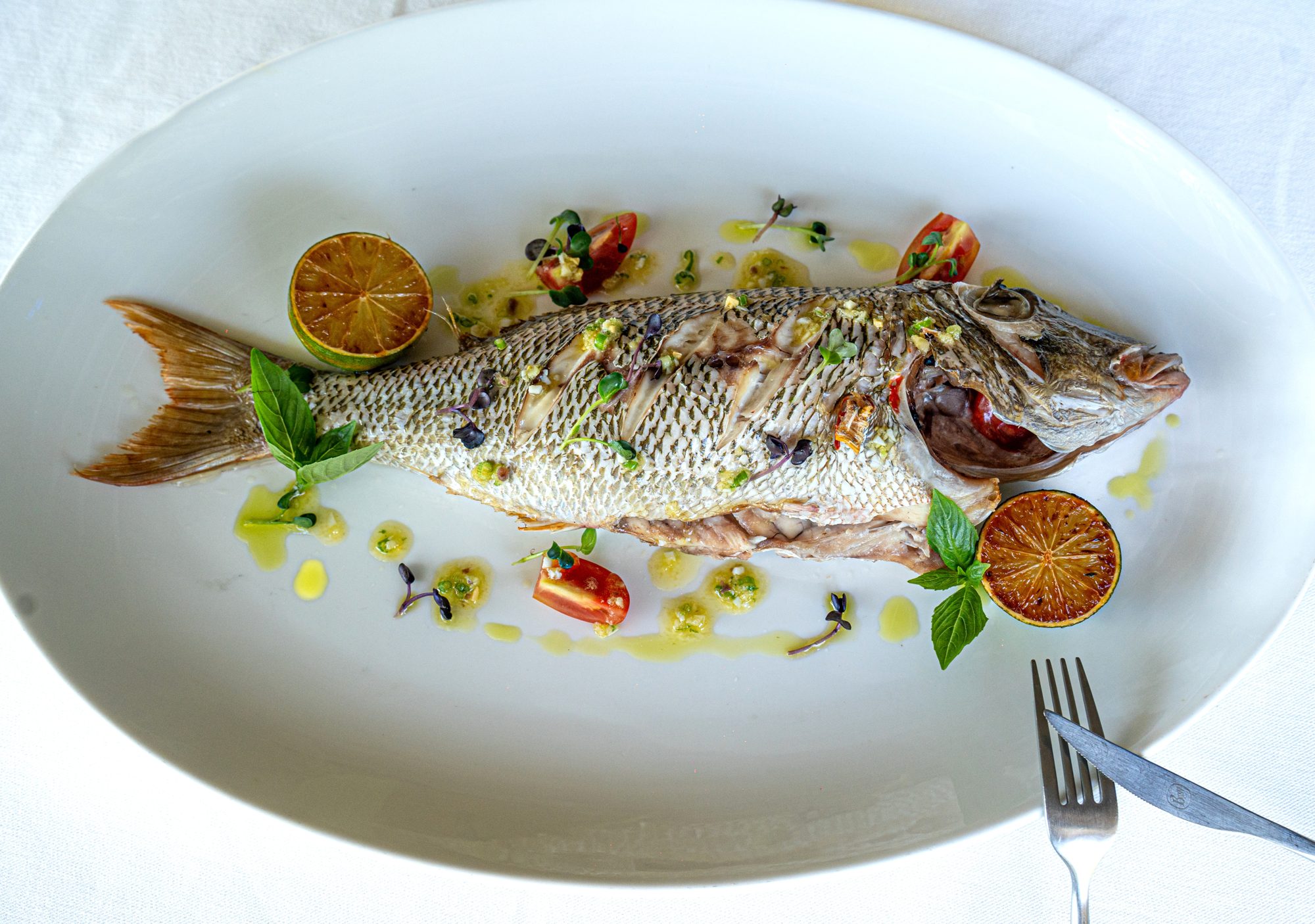
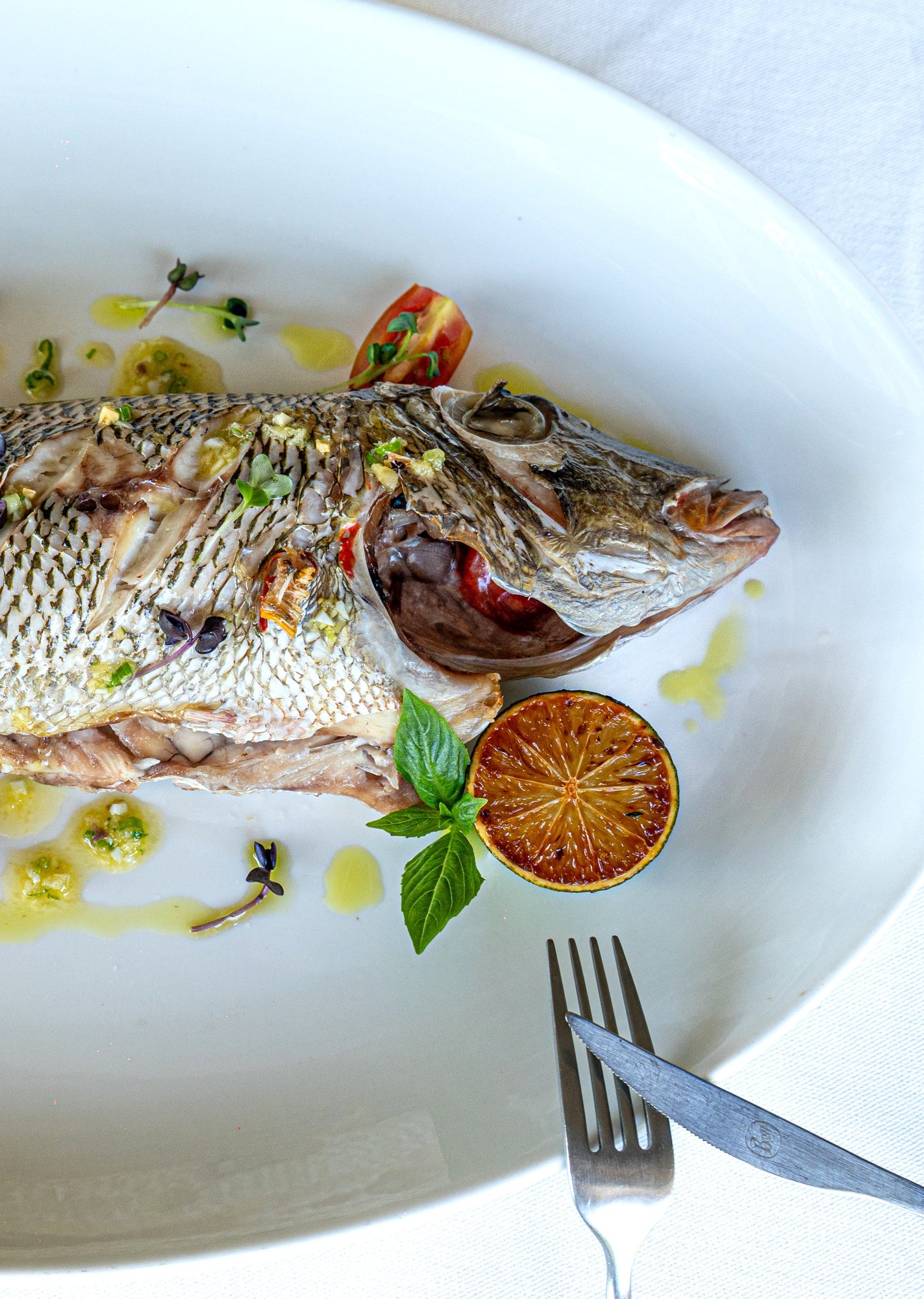
Citrus Sea Bream

Whole-Roasted · Charred Citrus · Basil & Lemon Olive Oil

The full recipe

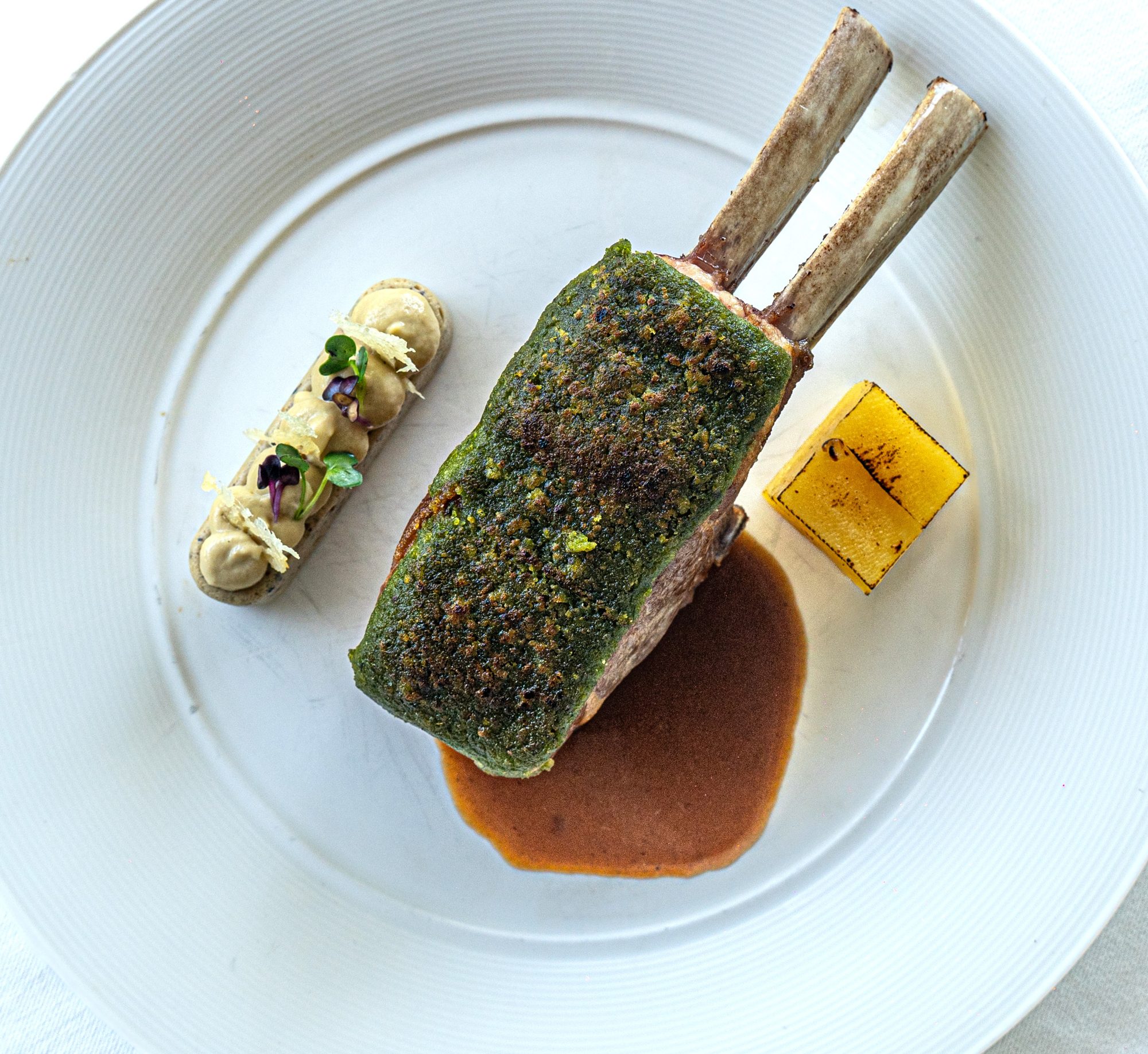
Herb-Crusted Lamb

Lamb Rack · Herb Crust · Lamb Jus · Potato Mille-Feuille

The full recipe
01/ 08
IVRecipes

Recipes

A selection of signature dishes —each built around a single idea, the finest produce,and the discipline to let it speak.

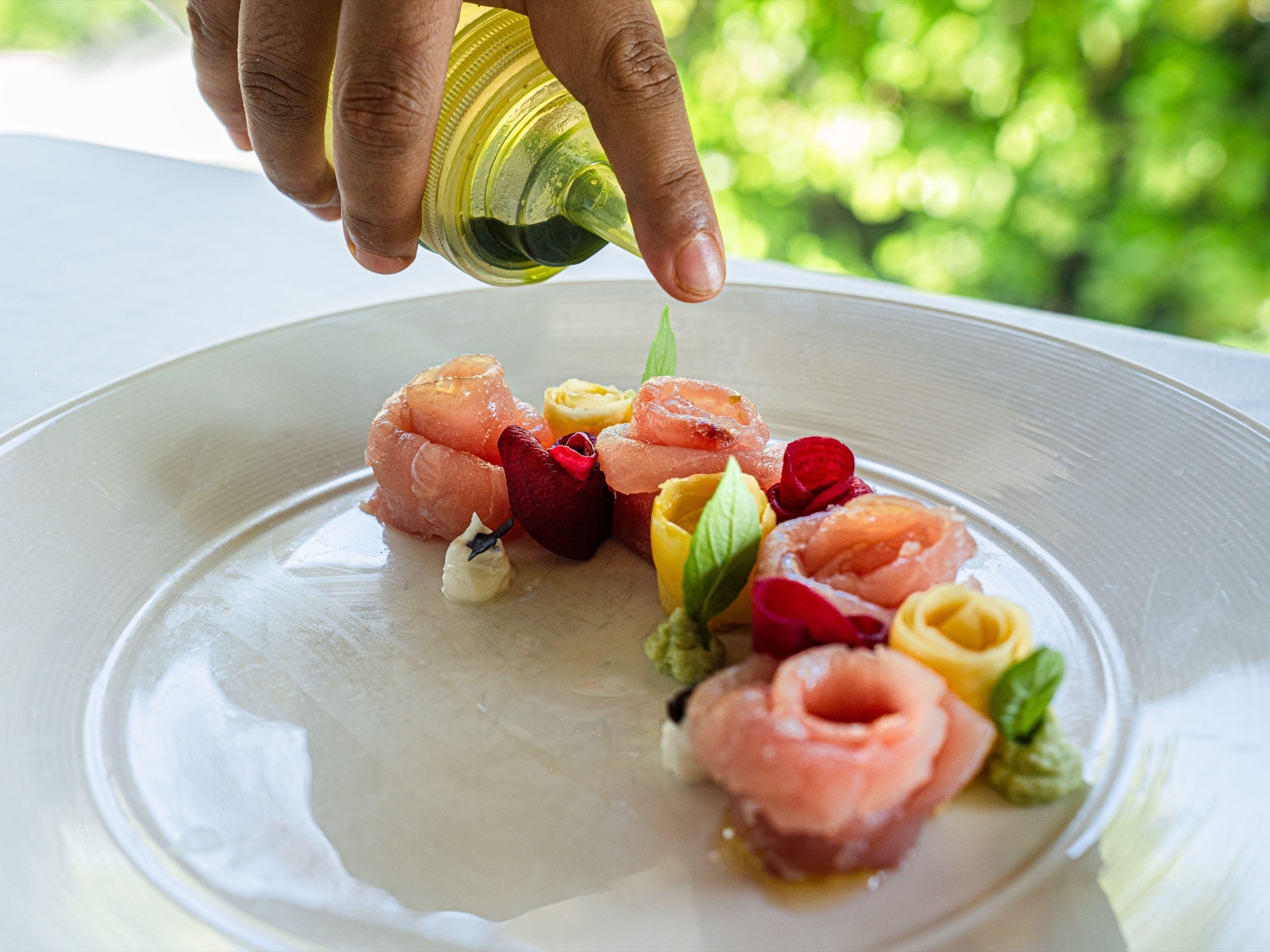
Reef Fish Crudo

Reef Fish Crudo

Pickled Beetroot, Mango, Fava Bean Purée, Gorgonzola Cream, Parsley Oil

Maldivian reef fish, lightly marinated and paired with pickled beetroot and fresh mango. A fava bean purée provides earthy depth, while a delicate Gorgonzola cream adds savoury richness. Bright parsley oil brings freshness, creating a balanced composition of acidity, sweetness, richness and freshness.

Chef’s note

This dish is built around the delicate freshness of Maldivian reef fish served as a crudo, lightly marinated and balanced with vibrant contemporary accompaniments. Pickled beetroot and exotic mango bring acidity and natural sweetness, while fava bean purée and Gorgonzola add depth, texture and savoury richness. Parsley oil brings brightness and ties the composition together with a clean herbal note. The reef fish must remain the star of the dish fresh, delicate and completely raw, with every element carefully balanced to enhance rather than mask the natural character.

The full recipe

Ingredients

Serves 4

Reef Fish Crudo

  • 480 g Maldivian reef fish fillet, skinless and boneless (Snapper, Rambow Runner)
  • 20 ml extra virgin olive oil
  • Sea salt
  • Freshly ground white pepper
  • Finely grated lemon zest

Pickled Beetroot

  • 150 g fresh beetroot
  • 100 ml white wine vinegar
  • 100 ml water
  • 40 g caster sugar
  • 5 g sea salt
  • 1 small bay leaf
  • 2 black peppercorns

Mango

  • 1 ripe mango
  • 10 ml fresh lime juice
  • Small pinch sea salt

Fava Bean Purée

  • 250 g shelled fava beans
  • 30 g butter
  • 50 ml cream
  • 1 small shallot, finely sliced
  • Sea salt
  • Freshly ground white pepper
  • 1 tsp lemon juice

Gorgonzola Cream

  • 120 g Gorgonzola Dolce
  • 150 ml heavy cream
  • Freshly ground white pepper

Parsley Oil

  • 80 g fresh flat-leaf parsley
  • 150 ml extra virgin olive oil
  • Sea salt

Garnish

  • Pickled beetroot, finely sliced
  • Mango, finely sliced
  • Fresh fava beans
  • Baby parsley leaves
  • Small edible flowers
  • Finely grated lemon zest
  • Maldon sea salt

Method

Prepare the Reef Fish Crudo

Trim the reef fish carefully, removing any remaining bones and connective tissue.

Chill the fillet thoroughly before preparation.

Using a sharp knife, slice the fish into thin, delicate slices, keeping the cuts clean and uniform.

Arrange the slices in a single layer on a chilled tray.

Season lightly with sea salt, freshly ground white pepper, finely grated lemon zest and extra virgin olive oil.

Allow the fish to marinate briefly under refrigeration, allowing the seasoning to penetrate while preserving the delicate texture and freshness of the raw fish.

Keep thoroughly chilled and prepare as close to service as possible.

Prepare the Pickled Beetroot

Peel the beetroot and slice very thinly using a mandoline.

Bring the vinegar, water, sugar, salt, bay leaf and peppercorns to a gentle simmer.

Pour the warm pickling liquor over the beetroot and allow to cool.

Refrigerate and allow the beetroot to pickle for several hours, preferably overnight.

Drain well before plating.

The beetroot should retain a slight natural crunch while providing bright acidity and earthy depth.

Prepare the Mango

Peel the mango and cut into fine slices or elegant ribbons.

Dress lightly with fresh lime juice and a small pinch of sea salt.

Keep chilled until required.

Prepare the Fava Bean Purée

Blanch the fava beans briefly in boiling salted water and refresh immediately in iced water.

Remove the outer skins where necessary to achieve a smooth and vibrant purée.

Sweat the shallot gently in butter without coloring.

Add the fava beans and cream and cook briefly until tender.

Blend until completely smooth.

Pass through a fine chinois.

Adjust the consistency with a small amount of cream if required.

Season with sea salt, freshly ground white pepper and lemon juice.

Prepare the Gorgonzola Cream

Warm the cream gently in a saucepan.

Add the Gorgonzola and allow it to melt slowly without boiling.

Blend until smooth and glossy.

Pass through a fine chinois.

Season lightly with freshly ground white pepper.

Prepare the Parsley Oil

Blanch the parsley briefly in boiling water and refresh immediately in iced water.

Squeeze thoroughly to remove excess moisture.

Blend the parsley with the extra virgin olive oil until vibrant green and completely smooth.

Pass through a fine chinois.

Season lightly with sea salt.

Keep refrigerated until required.

Presentation

Arrange the reef fish crudo elegantly on a chilled white plate, creating a natural flow through the composition.

Place portions of fava bean purée between and around the fish. Arrange the pickled beetroot and fresh mango around the fish, using contrasting shapes, textures and colours.

Add small points of Gorgonzola cream, using it sparingly so that it complements rather than dominates the delicate crudo. Finish with delicate drops of parsley oil. Garnish with fresh fava beans, baby parsley leaves and small edible flowers.

Complete with a light touch of finely grated lemon zest, Maldon sea salt and a few drops of excellent extra virgin olive oil.
Low-Temperature Prawns

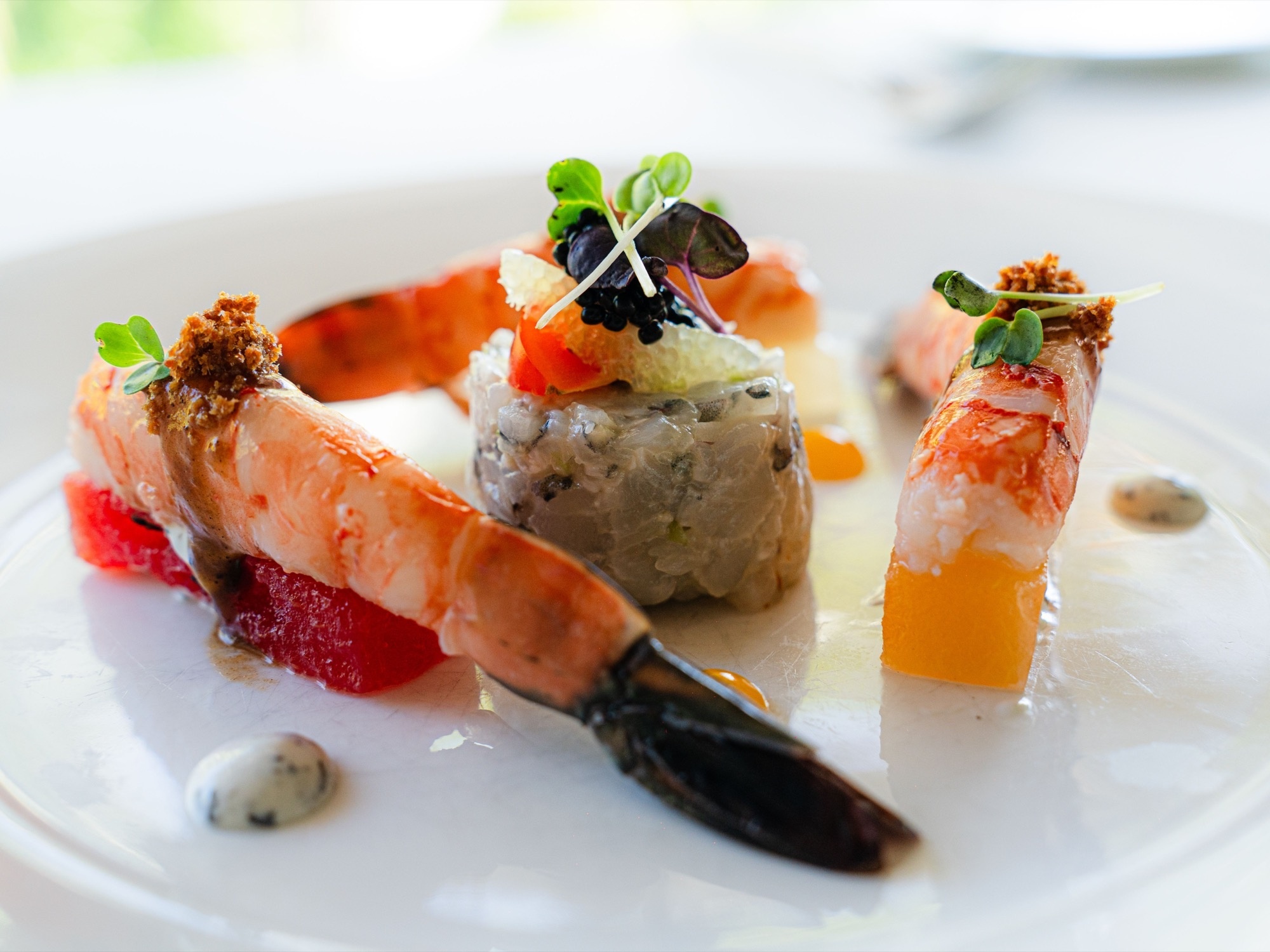
Low-Temperature Prawns

Compressed Three Melons, Prawn Tartare, Citrus, Parma Ham Crumble, Truffle Mayonnaise

A composition of low-temperature cooked prawns with the freshness of three varieties of melon. Prawn tartare adds a delicate raw seafood texture, while compressed melon brings freshness and acidity. Citrus provides brightness, Parma ham crumble adds a savoury, crisp element, and a refined truffle mayonnaise brings richness and depth.

Chef’s note

This dish is built around the delicate taste of the prawns, presented in two different ways, gently cooked at low temperature and finely hand-cut as a tartare. The three melons bring natural sweetness, freshness and contrasting textures, while citrus introduces the acidity needed to balance the composition. Parma ham crumble adds a crisp, savoury element, while the truffle mayonnaise provides depth and luxury. The prawns and melon should remain the star of the dish, with the citrus, Parma ham and truffle adding contrast without overpowering their delicate character.

The full recipe

Ingredients

Serves 4

Low-Temperature Prawns

  • 12 large fresh prawns, peeled and deveined
  • 20 ml extra virgin olive oil
  • 1 garlic clove, lightly crushed
  • 1 sprig fresh thyme
  • Finely grated lemon zest
  • Sea salt
  • Freshly ground white pepper

Compressed Three Melons

  • 150 g watermelon
  • 150 g cantaloupe melon
  • 150 g honeydew melon
  • 30 ml fresh lemon juice
  • 20 ml fresh lime juice
  • 10 g caster sugar
  • Pinch of sea salt

Prawn Tartare

  • 160 g fresh prawns, peeled and deveined
  • 1 small shallot, finely minced
  • 1 tsp fresh chives, finely sliced
  • 1 tsp extra virgin olive oil
  • 1 tsp fresh lemon juice
  • Finely grated lemon zest
  • Sea salt
  • Freshly ground white pepper

Citrus

  • 1 orange
  • 1 pink grapefruit
  • 1 lime
  • 20 ml fresh citrus juice
  • 10 ml extra virgin olive oil
  • Pinch of sea salt

Parma Ham Crumble

  • 80 g Parma ham, finely sliced
  • 30 g panko breadcrumbs
  • 1 tsp extra virgin olive oil
  • Freshly ground black pepper

Truffle Mayonnaise

  • 100 g good-quality mayonnaise
  • 15 g black truffle paste
  • 10 ml truffle oil
  • 10 ml fresh lemon juice
  • Sea salt
  • Freshly ground white pepper

Garnish

  • Micro herbs
  • Fresh basil leaves
  • Citrus segments
  • Freshly ground black pepper
  • Extra virgin olive oil

Method

Prepare the Low-Temperature Prawns

Clean and devein the prawns carefully, keeping them whole.

Season lightly with sea salt, white pepper and finely grated lemon zest.

Place the prawns in a vacuum bag with the olive oil, garlic and thyme.

Cook sous vide at 58°C for approximately 12–15 minutes, depending on the size of the prawns.

Remove from the bag and chill immediately in iced water.

Remove the garlic and thyme and keep the prawns refrigerated until required.

The prawns should remain delicate, juicy and just cooked, with a tender texture.

Prepare the Compressed Three Melons

Cut the watermelon, cantaloupe and honeydew into clean, uniform pieces.

Combine the lemon juice, lime juice, sugar and sea salt.

Arrange the melon pieces separately in vacuum bags and add a small amount of the citrus dressing.

Vacuum seal gently and allow the melon to compress under refrigeration.

Allow to rest for several hours before service.

Remove from the bags and drain lightly before plating.

The melon should retain its natural texture while becoming more intense in flavour.

Prepare the Prawn Tartare

Chill the prawns thoroughly before preparation.

Using a sharp knife, finely hand-cut the prawns into small, even pieces.

Combine with the shallot, chives, extra virgin olive oil, lemon juice and finely grated lemon zest.

Season carefully with sea salt and freshly ground white pepper.

Mix gently and keep thoroughly chilled until plating.

Prepare as close to service as possible.

Prepare the Citrus

Carefully remove the peel and all bitter white pith from the orange and grapefruit.

Cut the lime in to segments.

Combine a small amount of the reserved citrus juice with extra virgin olive oil and a pinch of sea salt.

Dress the citrus lightly just before plating.

Prepare the Parma Ham Crumble

Place the Parma ham on a lined baking tray and dry in a low oven until crisp.

Allow to cool completely.

Break the Parma ham into fine crumbs.

Toast the panko breadcrumbs lightly in olive oil until golden.

Season lightly with freshly ground black pepper.

Keep dry until required.

The crumble should remain crisp and intensely savoury.

Prepare the Truffle Mayonnaise

Combine the mayonnaise, black truffle paste, truffle oil and lemon juice.

Mix until completely smooth.

Adjust the seasoning with sea salt and freshly ground white pepper.

Pass through a fine chinois if a perfectly smooth finish is required.

Transfer to a piping bag and refrigerate until service.

Presentation

Arrange the compressed three melons in a refined composition across the centre of a chilled white plate.

Place the prawn tartare carefully between the melon elements.

Arrange the low-temperature cooked prawns around the composition, creating height and movement while keeping the prawns clearly visible.

Pipe small, elegant points of truffle mayonnaise around the plate.

Finish with the Parma ham crumble, adding it selectively for contrast and texture.

Garnish with micro herbs and delicate basil leaves.

Finish with a few drops of extra virgin olive oil and freshly ground black pepper.

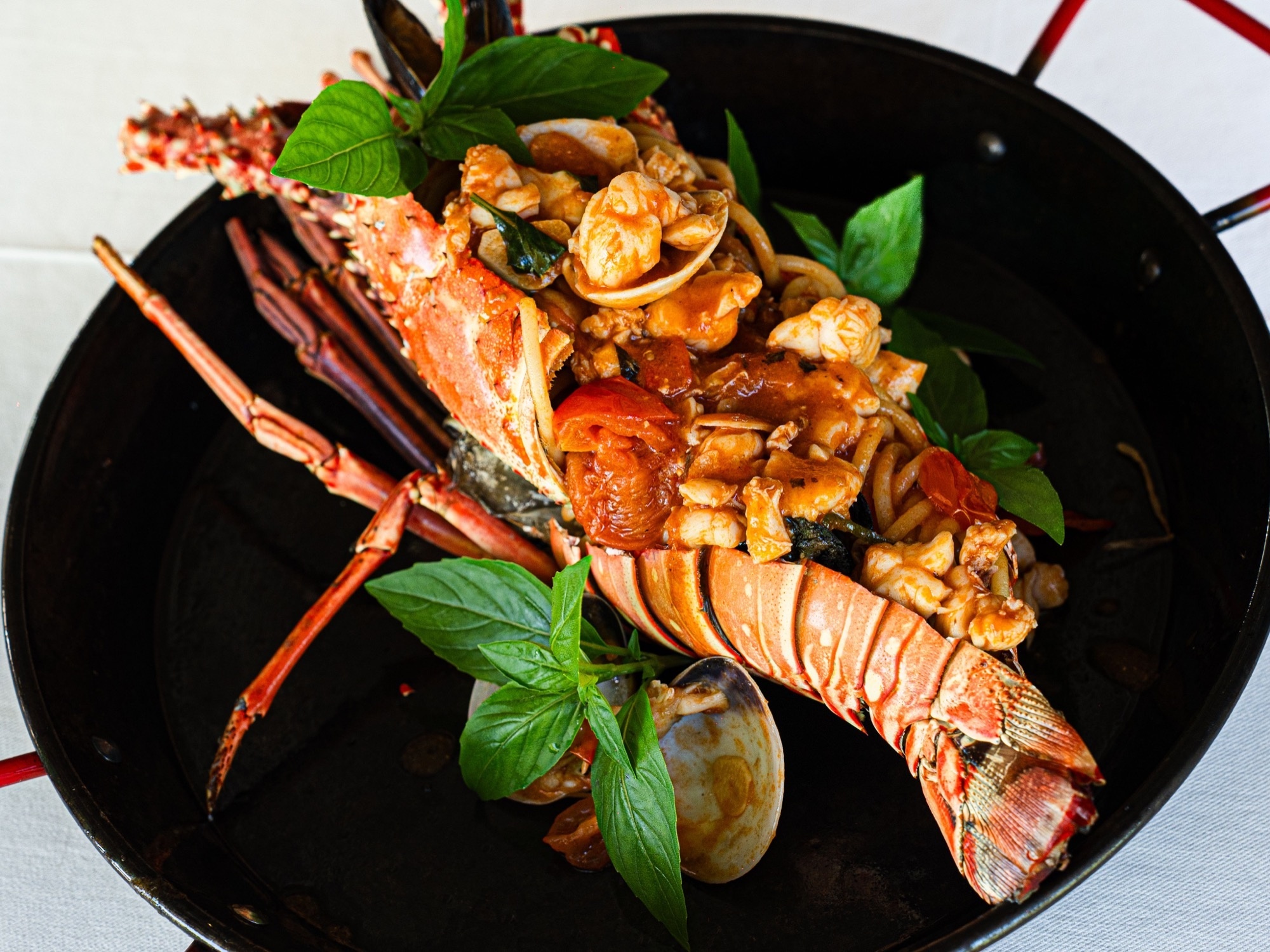
Spaghettone All’Aragosta

Spaghettone all’Aragosta

Gragnano Spaghettone, Lobster, Shellfish, Cherry Tomato, Fresh Chili, Basil

Gragnano Spaghettone and sweet lobster, the sauce combines roasted cherry tomatoes, lobster and shellfish reduction, fresh chili and extra virgin olive oil to create a rich and balanced emulsion. Fresh basil brings aromatic freshness, while the fresh Maldivian lobster remains the hero of the dish.

Chef’s note

This dish represent the simplicity of Italian coastal cuisine. Gragnano Spaghettoni provides the structure and texture, while the lobster and shellfish create the depth of the sauce. Fresh chili brings the warmth of the southern Italian cooking together with the cherry tomatoes and the basil. The pasta must remain the focus, with the lobster providing luxury and the sea providing the character.

The full recipe

Ingredients

Serves 4

Lobster & Shellfish

  • 2 whole lobsters, approximately 500–600 g each
  • 200 g fresh mussels
  • 150 g fresh clams
  • 2 tbsp extra virgin olive oil
  • 2 garlic cloves, lightly crushed
  • Sea salt
  • Freshly ground black pepper

Gragnano Spaghettone

  • 320 g Gragnano Spaghettoni
  • Sea salt, for the cooking water

Lobster & Cherry Tomato Sauce

  • 300 g ripe cherry tomatoes
  • 2 garlic cloves, finely sliced
  • 1 small shallot, finely diced
  • 1 fresh red chili, finely sliced
  • 80 ml dry white wine
  • 250 ml lobster or shellfish stock
  • 40 ml extra virgin olive oil
  • 1 small sprig fresh basil
  • Sea salt
  • Freshly ground black pepper

To Finish

  • 30 ml extra virgin olive oil
  • Fresh basil leaves
  • Fresh red chili, finely sliced
  • Finely grated lemon zest
  • Freshly ground black pepper
  • Sea salt

Method

Prepare the Lobster

Blanch the lobsters briefly in boiling salted water, then transfer immediately to iced water.

Remove the tail meat carefully, keeping the meat in large, pieces.

Reserve the lobster shells for the sauce.

Keep the lobster meat chilled until required.

Prepare the Shellfish

Clean the mussels and clams thoroughly.

Heat the olive oil in a saucepan with the crushed garlic.

Add the mussels and clams and deglaze with a little white wine.

Cover and cook until the shells open.

Remove the shellfish immediately and reserve.

Strain the cooking liquor through a fine chinois and reserve for the sauce.

Discard any mussels or clams that remain closed.

Prepare the Lobster & Tomato Sauce

Lightly crush the reserved lobster shells to release their flavour.

Heat the olive oil in a saucepan and gently sweat the shallot and garlic without colouring.

Add the lobster shells and cook gently for several minutes.

Add the cherry tomatoes and fresh chilli and continue cooking until the tomatoes begin to soften and release their juices.

Deglaze with the white wine and reduce slightly.

Add the lobster stock and reserved shellfish cooking liquor.

Simmer gently for approximately 20 minutes, allowing the flavours to concentrate.

Add the basil during the final few minutes of cooking.

Pass the sauce through a fine chinois, pressing gently to extract the maximum flavour.

Return to the pan and reduce until concentrated, glossy and lightly coating the back of a spoon.

Adjust the seasoning.

Cook the Spaghettoni

Bring a large pot of salted water to the boil.

Cook the Gragnano Spaghettoni until al dente, approximately 3 minutes less than the recommended cooking time.

Reserve some of the pasta cooking water before draining.

Finish the Spaghettoni

Transfer the Spaghettoni directly into the lobster sauce.

Add a small amount of reserved pasta water and toss vigorously over medium heat.

Continue tossing until the sauce becomes glossy and emulsified, completely coating the pasta.

Add the lobster meat, mussels and clams during the final minute, warming them gently without overcooking the seafood.

Finish with extra virgin olive oil, fresh basil and finely sliced fresh chilli.

Adjust the seasoning and add a touch of finely grated lemon zest to bring freshness and balance.

The finished Spaghettoni should be al dente, glossy and intensely flavoured, with the sauce.

Presentation

Place the Spaghettoni in the centre of a warm black skillet or shallow pasta plate.

Twirl the pasta into an elegant nest.

Arrange the lobster pieces over and around the Spaghettoni, with the mussels and clams naturally into the composition. Finish with fresh basil leaves and a few slices of fresh chilli.

Drizzle lightly with extra virgin olive oil and finish with a touch of finely grated lemon zest.

For a more dramatic presentation, retain the shell of one lobster, dry it in the oven until crisp, and use it as a natural vessel to hold a portion of the Spaghettoni.

Spirulina Tagliolini

Spirulina Tagliolini

Scampi Tartare, Beluga Caviar, Shellfish Bisque, Lime, Crustacean Powder

Combining delicate spirulina-infused tagliolini with hand-cut scampi tartare and Beluga caviar. A concentrated shellfish bisque provides depth and richness, balanced by the freshness of lime. Crustacean powder adds an intense savory finish, while green herb oil bring freshness, colour and aromatic complexity.

Chef’s note

This dish brings together the freshness of scampi tartare, the luxury of Beluga caviar and the depth of a concentrated shellfish bisque, presented with vibrant spirulina-infused tagliolini. The lime provides brightness against the richness of the bisque and caviar, while the crustacean powder intensifies the natural flavour of the shellfish. Fresh herb oil and micro herbs add colour and a clean aromatic finish. The scampi must remain delicate, the caviar must be used sparingly, and the spirulina tagliolini must retain its texture and vibrant character. Every element should enhance the natural sweetness and freshness of the crustaceans.

The full recipe

Ingredients

Serves 4

Spirulina Tagliolini

  • 300 g Italian 00 flour
  • 150 g fine semola di grano duro rimacinato
  • 4 whole eggs
  • 2 egg yolks
  • 8–10 g spirulina powder
  • Pinch of fine sea salt

Scampi Tartare

  • 240 g fresh scampi, peeled and deveined
  • 10 ml extra virgin olive oil
  • 10 ml fresh lime juice
  • Finely grated lime zest
  • 1 tsp fresh chives, finely sliced
  • Sea salt
  • Freshly ground white pepper

Shellfish Bisque

  • 500 g mixed crustacean shells
  • 1 small shallot, finely sliced
  • 1 small carrot, finely diced
  • 1 small celery stalk, finely diced
  • 1 garlic clove
  • 1 tbsp tomato paste
  • 80 ml Cognac
  • 100 ml dry white wine
  • 600 ml fish stock
  • 150 ml cream
  • 1 sprig thyme
  • 1 bay leaf
  • 20 ml extra virgin olive oil
  • Sea salt
  • Freshly ground white pepper

Parsley & Herb Oil

  • 60 g fresh flat-leaf parsley
  • 20 g fresh basil
  • 150 ml extra virgin olive oil
  • Pinch of sea salt

Caviar

  • 40 g Beluga caviar

Crustacean Powder

  • 100 g cleaned crustacean shells
  • Sea salt

Garnish

  • Micro herbs
  • Fresh lime zest
  • Fine crustacean powder
  • Fresh herbs
  • Maldon sea salt

Method

Prepare the Spirulina Tagliolini

Combine the 00 flour, semola, spirulina powder and sea salt.

Make a well in the centre and add the whole eggs and egg yolks.

Gradually incorporate the flour into the eggs until a dough forms.

Knead for approximately 8–10 minutes until smooth and elastic.

Wrap tightly and allow to rest in the refrigerator for at least 30 minutes.

Roll the dough progressively through a pasta machine until thin and even.

Cut into fine tagliolini.

Dust lightly with semola and form into loose portions, keeping the strands as uniform as possible.

Prepare the Scampi Tartare

Chill the scampi thoroughly before preparation.

Using a sharp knife, cut the scampi into clean, slightly larger cubes to retain its delicate texture and natural sweetness.

Season gently with extra virgin olive oil, lime juice, lime zest and finely sliced chives.

Season with sea salt and freshly ground white pepper.

Mix delicately and keep thoroughly chilled.

Prepare as close to service as possible.

Prepare the Shellfish Bisque

Crush the crustacean shells lightly to release their flavour.

Heat the olive oil in a heavy saucepan and sauté the shells over medium-high heat until fragrant and lightly coloured.

Add the shallot, carrot, celery and garlic and cook gently without excessive colouring.

Add the tomato paste and cook for 1–2 minutes.

Deglaze with Cognac and allow the alcohol to evaporate.

Add the white wine and reduce by half.

Add the fish stock, thyme and bay leaf.

Simmer gently for approximately 30 minutes, skimming regularly.

Pass through a fine chinois, pressing gently to extract the maximum flavour.

Return the bisque to the pan and reduce until concentrated.

Add the cream and simmer gently until the bisque becomes silky and lightly coats the back of a spoon.

Pass once more through a fine chinois and adjust the seasoning.

Keep warm until service.

Prepare the Herb Oil

Blanch the parsley and basil briefly in boiling water and refresh immediately in iced water.

Squeeze thoroughly to remove excess moisture.

Blend with the extra virgin olive oil until intensely green and completely smooth.

Pass through a fine chinois.

Season lightly with sea salt.

Keep refrigerated until required.

Prepare the Crustacean Powder

Clean the reserved crustacean shells thoroughly and dry completely.

Dry in a low oven until completely crisp and brittle.

Blend to a fine powder and pass through a fine sieve.

Season very lightly with sea salt.

Store in an airtight container until required.

Cook the Tagliolini

Bring a large pot of generously salted water to the boil.

Cook the spirulina tagliolini until al dente, approximately 1–2 minutes depending on thickness.

Reserve a small amount of pasta cooking water.

Drain the pasta and transfer directly into a pan containing a small amount of warm shellfish bisque.

Toss gently while adding a little pasta water until the sauce becomes glossy and emulsified.

Finish with a small amount of extra virgin olive oil.

The tagliolini should remain delicate, glossy and perfectly al dente.

Presentation

Pour a thin, elegant layer of shellfish bisque into the centre of a wide white plate.

Using a carving fork or pasta tweezers, roll the tagliolini into a tight, perfectly uniform nest.

Place the nest precisely in the centre of the bisque.

Arrange a generous portion of the larger-cut scampi tartare delicately on top of the pasta.

Add a small, restrained portion of Beluga caviar over the tartare.

Finish with several precise drops of green herb oil around the bisque.

Add a delicate scattering of crustacean powder, both on the pasta and on the dish.

Finish with carefully selected micro herbs and a fine touch of fresh lime zest.

Roasted Fillet Mignon

Roasted Fillet Mignon

Beef Jus Reduction, Fondant Potato, Tarragon Hollandaise, Summer Truffle

A perfectly roasted fillet mignon and the earthy perfume of summer truffle. A deeply reduced beef jus gives richness and depth, while a crisp, golden fondant potato offers a delicate contrast of texture. Silky tarragon hollandaise brings freshness and aromatic complexity, completing a luxurious and balanced composition.

Chef’s note

This dish is a contemporary expression of classic European luxury cuisine, built around the combination of perfectly roasted beef, rich jus, fondant potato and summer truffle. The deep beef reduction provides intensity and savoury depth, while the fondant potato brings a delicate contrast between its golden exterior and buttery centre. Tarragon hollandaise introduces freshness and aromatic complexity, balancing the richness of the beef and truffle. The summer truffle should perfume the dish, the jus should provide depth, and the hollandaise should bring freshness without overpowering the natural flavour of the beef.

The full recipe

Ingredients

Serves 4

Roasted Fillet Mignon

  • 4 beef Fillet Mignon portions, approximately 180 g each
  • 20 ml extra virgin olive oil
  • 30 g unsalted butter
  • 2 garlic cloves, lightly crushed
  • 2 sprigs fresh thyme
  • Sea salt
  • Freshly ground black pepper

Beef Jus Reduction

  • 500 ml beef stock or veal jus
  • 100 ml red wine
  • 1 shallot, finely sliced
  • 1 small carrot, finely diced
  • 1 celery stalk, finely diced
  • 1 sprig thyme
  • 1 bay leaf
  • 20 g cold unsalted butter
  • Sea salt
  • Freshly ground black pepper

Fondant Potatoes

  • 4 large potatoes
  • 40 g unsalted butter
  • 150 ml vegetable stock
  • 1 sprig thyme
  • 1 garlic clove
  • Sea salt
  • Freshly ground white pepper

Tarragon Hollandaise

  • 3 egg yolks
  • 150 g clarified butter
  • 15 ml white wine vinegar
  • 15 ml water
  • 1 small shallot, finely sliced
  • 1 tbsp fresh tarragon, finely chopped
  • Sea salt
  • Freshly ground white pepper
  • Lemon juice, to taste

Summer Truffle

  • 40 g fresh summer truffle
  • Extra virgin olive oil
  • Maldon sea salt

Garnish

  • Fresh tarragon leaves
  • Micro herbs
  • Thin summer truffle slices
  • Freshly ground black pepper

Method

Prepare the Beef Jus Reduction

Sweat the shallot, carrot and celery gently in a saucepan without colouring.

Add the red wine, thyme and bay leaf and reduce until almost completely evaporated.

Add the beef stock or veal jus and simmer gently until reduced by approximately two-thirds and intensely flavoured.

Pass through a fine chinois.

Return to the pan and reduce further until the jus has a rich, glossy consistency.

Whisk in the cold butter immediately before serving.

Adjust the seasoning carefully.

The finished jus should be deep, glossy and concentrated without becoming overly salty or heavy.

Prepare the Fondant Potatoes

Peel the potatoes and cut into clean, uniform cylinders.

Rinse briefly and dry.

Heat the butter in a heavy-based pan and carefully colour the potatoes on both flat sides until evenly golden.

Add the garlic and thyme.

Pour in the stock until it reaches approximately halfway up the potatoes.

Transfer to a moderate oven and cook gently until the potatoes are completely tender while maintaining their shape.

Remove the garlic and thyme.

The exterior should be golden and caramelised, while the centre remains soft and creamy.

Prepare the Tarragon Hollandaise

Place the shallot, white wine vinegar and water in a small saucepan.

Reduce gently until approximately one-third of the liquid remains.

Strain and allow to cool slightly.

Place the egg yolks in a heatproof bowl and whisk in the reduction.

Set the bowl over a gentle bain-marie and whisk continuously until the yolks become thick, pale and aerated.

Slowly incorporate the clarified butter while whisking continuously until a smooth, stable emulsion forms.

Season with salt, white pepper and a few drops of lemon juice.

Fold through the finely chopped fresh tarragon.

Keep warm, but do not allow the hollandaise to become too hot or split.

Prepare the Beef Fillet Mignons

Remove the beef from refrigeration and allow it to temper briefly before cooking.

Season generously with sea salt and freshly ground black pepper.

Heat a heavy frying pan until very hot.

Add the olive oil and sear the beef evenly on all sides until deeply caramelised.

Add the butter, garlic and thyme.

Baste the beef continuously with the foaming butter.

Transfer to a moderate oven if necessary and cook to the desired internal temperature, ideally medium-rare.

Allow the beef to rest for several minutes before serving.

Finish with a light touch of Maldon sea salt.

Prepare the Summer Truffle

Clean the truffle carefully with a soft brush.

Slice thinly using a truffle slicer immediately before plating.

Reserve several beautiful slices for the top of the beef and finely slice the remaining for the sauce.

Presentation

Place the fondant potato slightly off-centre on a warm white plate.

Position the roasted beef tenderloin alongside it, allowing the caramelised exterior and pink centre to remain visible.

Arrange a delicate quenelle or spoonful of tarragon hollandaise beside the beef.

Pour or brush a small amount of the beef jus reduction around the composition, keeping the sauce concentrated rather than flooding the plate.

Generously shave summer truffle over the beef, allowing several slices to fall naturally across the meat.

Finish with delicate , herbs and micro herbs and a final touch of freshly ground black pepper.

Complete with a few drops of extra virgin olive oil and additional summer truffle immediately before serving.

The final plate should remain elegant, restrained and luxurious, allowing the beef and summer truffle to remain the clear focal points.

Embered Octopus

Embered Octopus

Charcoal-Grilled Octopus, Eggplant Purée, Mediterranean Olives & Cherry Tomatoes, Capers, Italian Basil Salsa Verde

Charcoal-grilled octopus and the silky richness of roasted eggplant purée with the sweet cherry tomatoes, Mediterranean olives and capers provide acidity and salinity, while an Italian basil salsa Verde brings freshness, herbs balance.

Chef’s note

The dish is inspired by the flavours of the Mediterranean, fire, smoke, eggplant, ripe tomatoes, olives, capers and fresh basil. The charcoal gives the octopus its roasted character, while the eggplant purée provides a soft, creamy counterpoint. The tomatoes bring natural sweetness, the olives and capers add salinity and acidity, and the basil salsa verde cuts through the richness with freshness. The final plate should feel precise, rustic in flavour but refined in execution.

The full recipe

Ingredients

Serves 4

Charcoal-Grilled Octopus

  • 1.2 kg cleaned octopus
  • 1 small onion, halved
  • 2 garlic cloves
  • 1 bay leaf
  • 100 ml extra virgin olive oil
  • Sea salt
  • Freshly ground black pepper

Eggplant Purée

  • 3 large eggplants
  • 1 garlic clove
  • 40 ml extra virgin olive oil
  • 20 ml fresh lemon juice
  • Sea salt
  • Freshly ground black pepper

Mediterranean Olives & Cherry Tomatoes

  • 200 g mixed cherry tomatoes
  • 80 g Mediterranean black and green olives, pitted
  • 30 g capers, rinsed
  • 1 garlic clove, finely sliced
  • 1 small sprig fresh thyme
  • Extra virgin olive oil
  • Sea salt

Italian Basil Salsa Verde

  • 50 g fresh basil leaves
  • 20 g flat-leaf parsley
  • 1 small garlic clove
  • 1 tbsp capers
  • 1 tsp Dijon mustard
  • 20 ml fresh lemon juice
  • 100 ml extra virgin olive oil
  • Half Boiled egg
  • Half slice of toast bread
  • Sea salt
  • Freshly ground black pepper

Garnish

  • Fresh basil leaves
  • Lemon zest
  • A few capers
  • Extra virgin olive oil
  • Maldon sea salt

Method

Prepare the Octopus

Place the cleaned octopus in a large saucepan with the onion, garlic and bay leaf. Cover and cook gently until the octopus is completely tender.

Remove from the cooking liquid and allow to cool slightly. Separate the tentacles and pat them thoroughly dry.

Brush the tentacles with extra virgin olive oil and season lightly with sea salt and black pepper.

Charcoal-Grill the Octopus

Heat a charcoal grill until very hot.

Grill the octopus tentacles over high heat, turning regularly, until deeply caramelised and charred on the outside while remaining tender inside.

The exterior should develop a dark, smoky crust without drying the octopus.

Rest briefly before plating.

Prepare the Eggplant Purée

Prick the eggplants and roast over a high heat until the skins are deeply charred and the flesh is completely soft.

Allow them to cool slightly, then remove the skins and drain the flesh well.

Blend the eggplant with garlic, olive oil and lemon juice until smooth and silky.

Season with sea salt and freshly ground black pepper.

For an exceptionally refined finish, pass the purée through a fine sieve.

Prepare the Mediterranean Garnish

Cut the cherry tomatoes into halves or quarters, depending on their size.

Warm a little extra virgin olive oil in a pan and gently sauté the garlic.

Add the cherry tomatoes, olives, capers and thyme. Cook briefly, keeping the tomatoes intact and fresh rather than allowing them to become a sauce.

Adjust the seasoning carefully—the olives and capers will already provide considerable salinity.

Prepare the Italian Basil Salsa Verde

Combine the basil, parsley, garlic, egg, bread, capers, Dijon mustard and lemon juice.

Finely chop together while gradually incorporating the extra virgin olive oil.

The salsa verde should remain fresh, vibrant and slightly textured rather than completely smooth.

Season with sea salt and freshly ground black pepper.

Presentation

Spoon a generous but elegant layer of eggplant purée onto the centre of a warm white plate.

Place the charcoal-grilled octopus prominently over the purée, allowing the natural shape of the tentacle to remain visible. Arrange the cherry tomatoes, Mediterranean olives and capers naturally around the octopus.

Add several delicate points of Italian basil salsa verde and a few drops of extra virgin olive oil.

Finish with fresh basil leaves, fine lemon zest and a few flakes of Maldon sea salt.

Citrus-Sea Bream

Citrus Sea Bream

Whole-Roasted Sea Bream, Charred Citrus, Cherry Tomatoes, Basil & Lemon Olive Oil

A whole sea bream, combining delicate roasted fish with the bitterness of the citrus, the sweetness of ripe cherry tomatoes, the salinity of olives and capers, and the freshness of basil and extra virgin olive oil.

Chef’s note

This dish celebrates the simplicity and generosity of the Mediterranean cooking. The whole sea bream is roasted to preserve its natural sweetness and moisture, while charred citrus introduces acidity and a subtle bitter note. Sweet cherry tomatoes, olives and capers provide contrast through freshness, salinity and texture. The basil and lemon olive oil brings everything together with an herbal finish. The presentation should remain natural, elegant and generous, allowing the whole fish to speak for itself.

The full recipe

Ingredients

Serves 4

Whole Sea Bream

  • 1 whole sea bream, approximately 1.2–1.5 kg, scaled and gutted
  • 2 garlic cloves, lightly crushed
  • 1 lemon, thinly sliced
  • 1 small bunch fresh basil
  • 60 ml extra virgin olive oil
  • Sea salt
  • Freshly ground black pepper

Charred Citrus

  • 2 lemons or limes, halved
  • Extra virgin olive oil
  • Sea salt

Cherry Tomato, Olive & Caper Garnish

  • 200 g mixed cherry tomatoes
  • 70 g Mediterranean black and green olives, pitted
  • 20 g capers, rinsed
  • 1 garlic clove, finely sliced
  • 1 tsp fresh thyme leaves
  • Extra virgin olive oil
  • Sea salt
  • Freshly ground black pepper

Basil-Lemon Olive Oil

  • 40 g fresh basil leaves
  • 120 ml extra virgin olive oil
  • Zest of 1 lemon
  • 20 ml fresh lemon juice
  • Pinch of sea salt

Garnish

  • Fresh basil leaves
  • Micro herbs
  • Fine lemon zest
  • Extra virgin olive oil
  • Maldon sea salt

Method

Prepare the Sea Bream

Clean and dry the sea bream thoroughly. Score the skin with several shallow diagonal cuts on both sides.

Season the cavity with sea salt and freshly ground black pepper. Fill with crushed garlic, lemon slices and fresh basil.

Brush the outside generously with extra virgin olive oil and season the skin with sea salt and black pepper.

Roast the Fish

Place the sea bream on a lightly oiled roasting tray.

Roast in a preheated oven at 190°C until the flesh is just cooked and the skin is lightly crisp, approximately 20–30 minutes, depending on the size of the fish.

The flesh should remain moist and separate cleanly from the bone.

Char the Citrus

Place the citrus halves cut-side down on a very hot grill or cast-iron pan.

Cook until deeply caramelised and lightly charred. Set aside for plating.

Prepare the Cherry Tomatoes, Olives & Capers

Warm a little extra virgin olive oil in a sauté pan and gently cook the sliced garlic with the thyme.

Add the cherry tomatoes, olives and capers and cook briefly, keeping the tomatoes intact and fresh.

Season carefully with sea salt and freshly ground black pepper, remembering that the olives and capers already provide salinity.

Prepare the Basil-Lemon Olive Oil

Blend the fresh basil with the extra virgin olive oil until vibrant green.

For a refined restaurant finish, pass through a fine sieve.

Add the lemon zest, fresh lemon juice and a small pinch of sea salt. Mix gently and reserve.

Presentation

Place the whole roasted sea bream across a large warm white platter.

Arrange the charred citrus halves around the fish.

Scatter the cherry tomatoes, Mediterranean olives and capers naturally around the sea bream.

Add the basil-lemon olive oil around the plate and over the fish.

Finish with fresh basil leaves, micro herbs, fine lemon zest, a drizzle of extra virgin olive oil and a few flakes of Maldon sea salt. The fish should remain the unmistakable centrepiece of the composition.

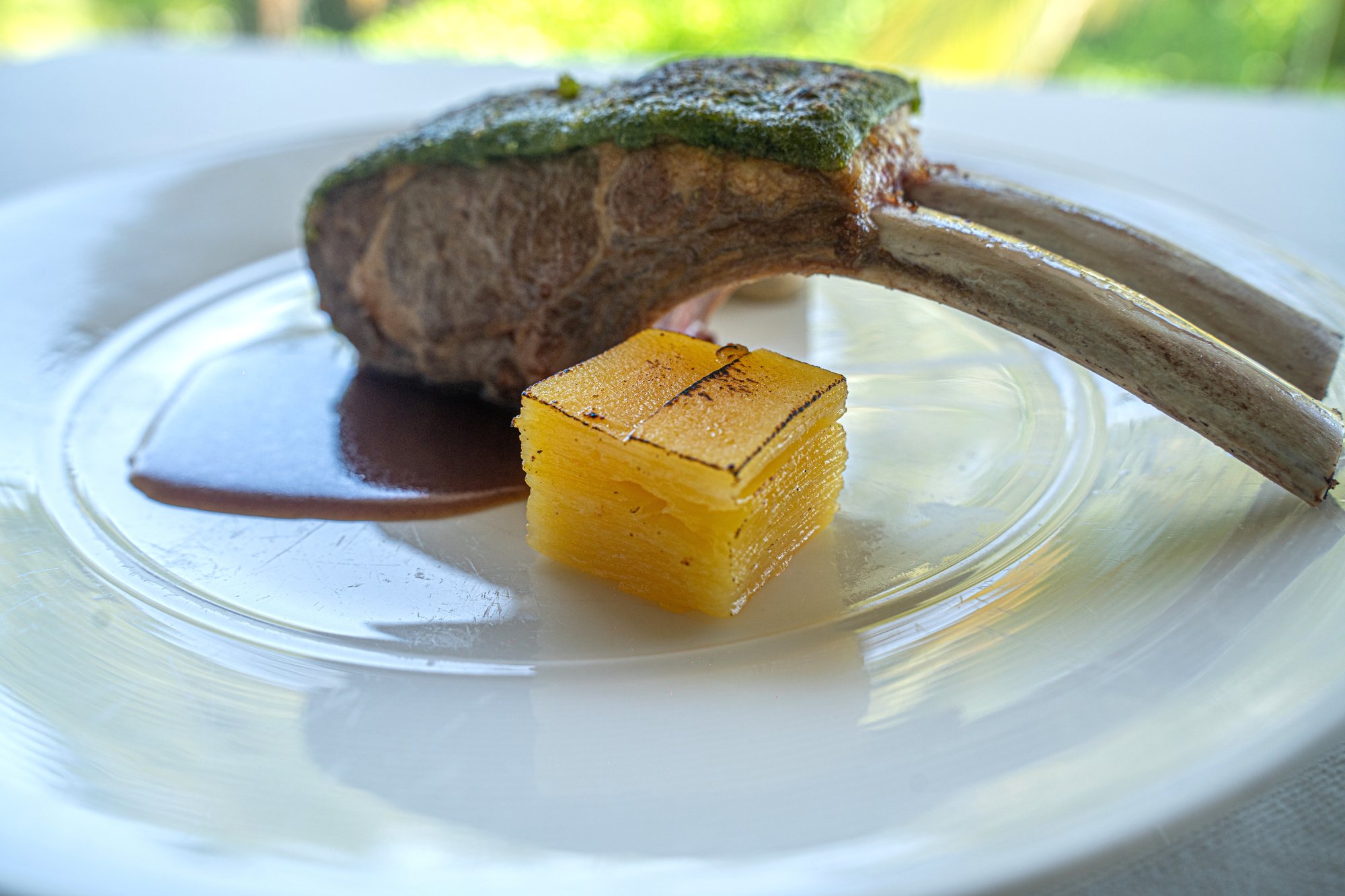
Herb-Crusted Lamb

Herb-Crusted Lamb

Roasted Lamb Rack, Italian Herb Crust, Lamb Jus, Potato Mille-Feuille & Mediterranean Eggplant Mousse Tart

Roasted lamb, combining a fragrant Italian herb crust with a deeply concentrated lamb jus, crisp layered potato mille-feuille and a delicate roasted eggplant mousse tart.

Chef’s note

This dish brings together the richness of roasted lamb with the aromatic character of Italian herbs and the flavours of the Mediterranean. The herb crust provides freshness, fragrance and texture against the tender lamb. The concentrated jus adds depth and reinforces the character of the meat, while the potato mille-feuille contributes crisp, buttery layers. The roasted eggplant mousse introduces a delicate smoky sweetness, creating a Mediterranean richness to the lamb.

The full recipe

Ingredients

Serves 4

Roasted Lamb Rack

  • 2 French-trimmed racks of lamb, approximately 8 bones each
  • 2 tbsp Dijon mustard
  • 1 tbsp extra virgin olive oil
  • Sea salt
  • Freshly ground black pepper

Italian Herb Crust

  • 80 g fresh breadcrumbs
  • 25 g flat-leaf parsley
  • 15 g fresh basil
  • 10 g fresh rosemary
  • 10 g fresh thyme
  • 1 garlic clove
  • 40 g Parmesan, finely grated
  • 30 ml extra virgin olive oil
  • Fine lemon zest
  • Sea salt
  • Freshly ground black pepper

Lamb Jus

  • 500 g lamb bones and trimmings
  • 1 small onion, roughly chopped
  • 1 carrot, roughly chopped
  • 1 celery stalk, roughly chopped
  • 2 garlic cloves
  • 1 tbsp tomato paste
  • 150 ml dry red wine
  • 700 ml lamb or veal stock
  • 1 sprig rosemary
  • 2 sprigs thyme
  • 1 bay leaf
  • 20 g cold butter
  • Sea salt
  • Freshly ground black pepper

Potato Mille-Feuille

  • 600 g large floury potatoes
  • 70 g clarified butter or melted butter
  • Fresh thyme leaves
  • Sea salt
  • Freshly ground black pepper

Mediterranean Eggplant Mousse

  • 2 large eggplants
  • 1 garlic clove
  • 25 ml extra virgin olive oil
  • 15 ml fresh lemon juice
  • 30 g Parmesan, finely grated
  • 1 egg yolk
  • 50 ml cream
  • Sea salt
  • Freshly ground black pepper

Garnish

  • Fresh basil or micro basil
  • Fresh thyme tips
  • Fine lemon zest
  • Extra virgin olive oil
  • Maldon sea salt

Method

Prepare the Lamb

Trim the lamb racks neatly, keeping a clean layer of fat over the eye of the meat.

Season generously with sea salt and freshly ground black pepper.

Heat the olive oil in a heavy pan and sear the lamb, beginning with the fat side, until deeply golden. Sear the remaining sides briefly.

Remove from the heat and brush the exposed surface generously with Dijon mustard.

Prepare the Italian Herb Crust

Combine the breadcrumbs, parsley, basil, rosemary, thyme and garlic in a food processor.

Blend until finely chopped but still slightly textured.

Fold in the Parmesan, lemon zest and olive oil. Season with sea salt and freshly ground black pepper.

Press the herb mixture firmly onto the mustard-coated surface of the lamb, creating an even crust.

Roast the Lamb

Place the lamb on a roasting tray and cook in a preheated oven at 190°C until the crust is crisp and the lamb reaches the desired internal temperature.

For a medium-rare finish, remove the lamb at approximately 52–54°C and allow it to rest for 8–10 minutes before carving.

The resting period allows the juices to redistribute while keeping the meat tender and pink.

Prepare the Lamb Jus

Roast the lamb bones and trimmings in a hot oven until deeply browned.

Add the onion, carrot, celery and garlic and continue roasting until caramelised.

Add the tomato paste and cook briefly.

Deglaze with the red wine and reduce by approximately two-thirds.

Add the lamb or veal stock, rosemary, thyme and bay leaf.

Simmer gently until the liquid is intensely flavoured and reduced.

Pass through a fine chinois and skim away excess fat.

Return to the pan and reduce until the jus has a rich, glossy consistency.

Whisk in the cold butter immediately before serving and adjust the seasoning.

Prepare the Potato Mille-Feuille

Peel the potatoes and slice them very thinly and evenly using a mandoline.

Arrange the slices in tight layers in a lined baking dish, brushing each layer lightly with clarified butter and seasoning with salt, pepper and fresh thyme.

Cover and bake at 175°C until completely tender.

Remove from the oven, place a weight over the potatoes and chill until firmly set.

Cut into clean rectangular portions.

Before serving, crisp the portions in a hot pan or oven until golden and caramelised on the outside while remaining tender inside.

Prepare the Mediterranean Eggplant Mousse

Char the eggplants over a high flame or under a very hot grill until the skins are deeply blackened and the flesh is completely soft.

Remove the skins and drain the flesh thoroughly.

Blend the roasted eggplant with garlic, olive oil, lemon juice and Parmesan until completely smooth.

Fold in the egg yolk and cream and season carefully with sea salt and freshly ground black pepper.

Pipe the mixture into small savoury silicon moulds.

Bake gently until the mousse is just set and lightly coloured on top.

Allow to rest briefly before plating.

Presentation

Carve the rested lamb rack into clean chops, keeping the Italian herb crust intact. Spoon a refined pool of lamb jus onto a warm white plate.

Place the lamb prominently over or beside the jus.

Add the potato mille-feuille alongside the lamb and position the Mediterranean eggplant mousse tart as a contrasting element.

Finish with delicate micro basil or fresh basil leaves, thyme tips, fine lemon zest, a few drops of extra virgin olive oil and Maldon sea salt.

The lamb should remain the unmistakable focal point of the plate, with each accompaniment providing a distinct contrast in texture, flavour or aroma.